Bild AI is changing software development: a look behind the scenes of BBT’s AI accelerator experience in Berlin

AI is changing software development: a look behind the scenes of BBT’s AI accelerator experience in Berlin

14. August 2026

Artificial intelligence is developing rapidly and is already changing how software is created. A company like BBT, which develops innovative software solutions for the insurance industry, this development offers enormous potential. At the same time, it raises new questions: how is AI changing the role of developers? What opportunities will this create for customers? And what responsibilities will still rest with humans?

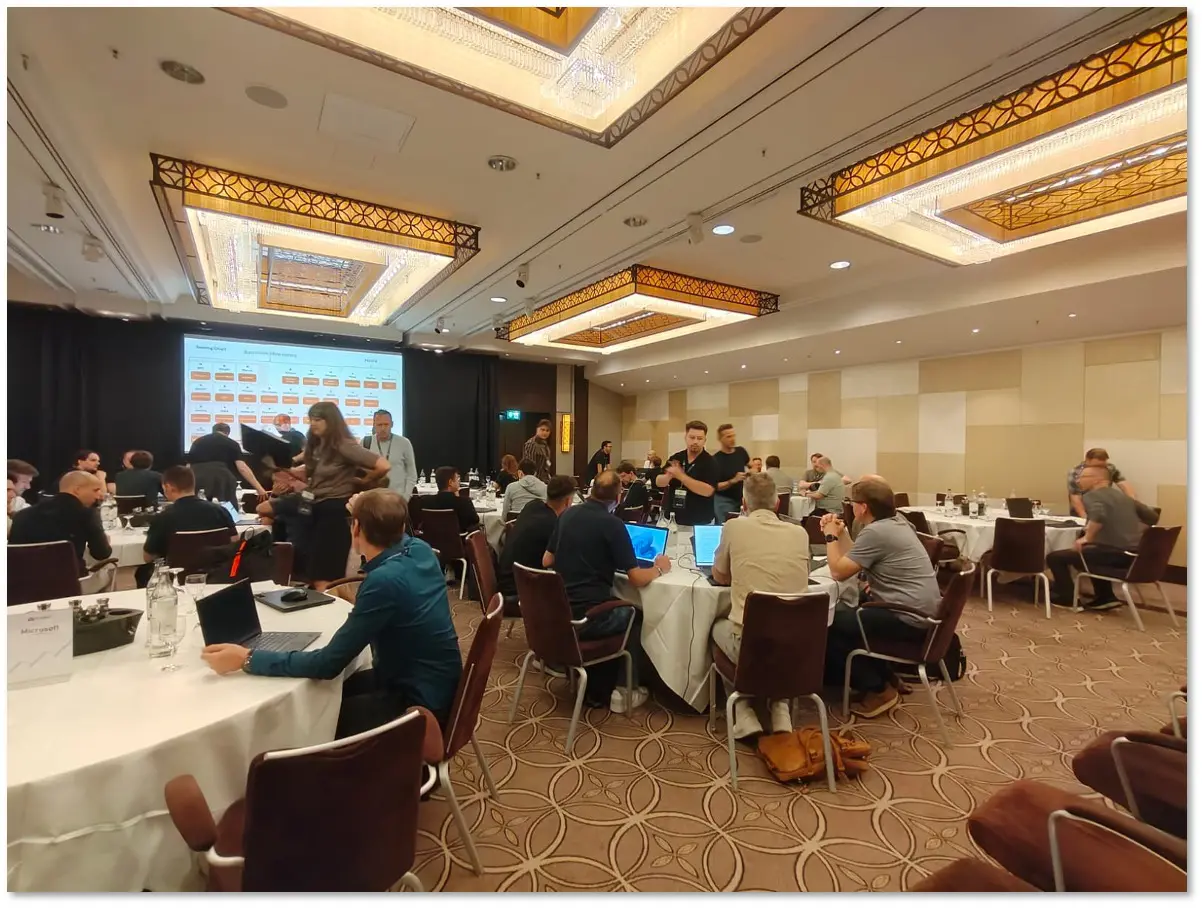
To investigate precisely these questions, BBT took part in the Volaris Group’s AI Accelerator in Berlin. During an intensive week-long program, more than 140 participants from 19 companies in the software development, product management and leadership spaces worked together to test practical use cases for artificial intelligence, learn about new ways of working and turn ideas into concrete prototypes.

For Matthias Hirschi, a software developer at BBT, one thing in particular was paramount:

“I wanted to learn something new and deliberately think outside the box.”

Turning theory into practice

The AI Accelerator was not a traditional training program. Instead, the focus was on practical collaboration on real-world issues. It became clear right from the initial discussions that despite the different products and markets, the participants face many common challenges. Companies that develop complex software solutions in particular are confronted with similar questions: How can artificial intelligence be meaningfully integrated into existing processes? Which tasks can be automated in the future? And how can AI help develop digital solutions faster and in a way that is more closely aligned with customers’ needs?

This question is particularly relevant for BBT. The development of insurance software operates in an environment characterized by high technical requirements, complex processes and clear quality standards. AI can provide support here by speeding up development processes and creating new opportunities for innovation, without replacing the necessary expert control.

Following the official kick-off, the participants worked intensively on these issues within their respective tracks. Professional exchanges, collaborative work phases and regular discussions with experts and technology partners took place in turn throughout the week. This created an environment in which new ideas could not only be discussed, but also tested and developed straightaway.

In the Developer Track, one central idea quickly came to the fore: good software doesn’t start with writing code, but with understanding the actual problem. Before a line is programmed, requirements must be clearly formulated, relationships understood and the necessary context created. This is precisely where AI can already make a key contribution.

The moment that inspired a rethink

As the week progressed, the focus shifted increasingly to practical implementation. Initial ideas led to specifications, and the BBT team used these to develop concrete prototypes with the help of modern AI tools. During the intensive build phase, it became strikingly clear just how closely humans and AI are already able to work together.

A particularly impressive moment for Matthias was when a feature was implemented almost independently by AI.

“The basic feature was already there. We mainly had to add to the technical context, check the result and make minor corrections.”

This experience made it clear how much software development can change. In future, the focus will not be on every single line of code, but on the ability to describe problems precisely, formulate the right requirements and ensure the quality of the results.

AI as a sparring partner

One of the most important findings from Berlin is that AI is not replacing developers – it is changing their role.

Instead of taking on routine tasks, development teams will be able to focus more on architecture, technical issues and analyzing solutions. AI helps with this as an intelligent assistant that makes suggestions, creates code or prepares tests.

Matthias describes this collaboration with a fitting comparison:

“AI is like an invisible partner by your side. It challenges you, tests your ideas and can write code for you. But you still have to make the decisions and take responsibility for them.”

This is particularly important in developing software for insurers. Technical requirements, data protection, regulatory stipulations and quality standards cannot be fully automated. They require experience, critical thinking and human judgment.

Opportunities for BBT

The experience gathered from the AI Accelerator program demonstrates the potential that modern AI tools offer for BBT. New functions and product ideas can be visualized more quickly and implemented as initial prototypes. This can offer a decisive advantage, especially in the development of software for insurers and insurance companies, as requirements and new ideas can be identified at an early stage, tested and further developed together with customers.

Instead of spending a long time working towards a fully developed solution, initial prototypes enable a faster exchange of ideas: which feature actually adds value? Which processes can be simplified? And which requirements need to be taken into account to achieve an optimum solution?

This iterative approach helps BBT to drive innovation in a targeted manner and develop prototypes that are not only technically impressive, but also bring about lasting improvements to customers’ daily working lives. Models can therefore be discussed, further developed and specifically improved at an early stage in collaboration with customers.

However, the week in Berlin also demonstrated that the successful use of AI goes far beyond technology. The cultural change within a company is at least as important. New tools alone are not enough – what matters is how teams work with them, how results are scrutinized and how responsibility is taken. Critical thinking, technical expertise and a shared understanding of quality remain indispensable, even in AI-supported software development.

This approach was a recurring theme throughout the entire AI Accelerator and was repeatedly distilled into a simple guiding principle:

“We are automating work steps – not responsibility.”
Bild Behind the code: Marko – a software architect with an eye for the bigger picture

Behind the code: Marko – a software architect with an eye for the bigger picture

24. June 2026

When you think of software, you often think of code. But behind successful software solutions are people who create structures, support teams and put new technologies into practice. One of them is Marko.

At the age of 41, the family man combines technical expertise with a keen eye for the bigger picture. As a software architect at BBT, he ensures that ideas become viable solutions – and helps teams to implement them successfully.

His career in computer science began with a computer scientist apprenticeship at RUAG Aerospace. It was there that he discovered his passion for technology and digital solutions. He then deepened his knowledge by studying software engineering at the University of Engineering and Architecture in Horw (now Lucerne University of Applied Sciences and Arts). He then spent around ten years in the world of IT services. As a software engineer at bbv Software Services AG, he worked on various customer projects and continuously developed his technical and methodological expertise.

The next step in his career led him to BBT. Here, he was able to help shape important future projects from the outset – including the development of the Azure cloud infrastructure and the first cloud migrations. These are experiences that stood him in good stead for his current role as a software architect.

His working day begins with an overview: checking his calendar, going through his emails and prioritizing the most important tasks for the day. Only then does he immerse himself in the various projects that shape his day-to-day work.

His remit extends far beyond technical architecture. Marko designs software solutions, supports teams with implementation and is currently working with his team on a particularly exciting project: a chatbot that answers customer inquiries about BBT software solutions based on existing manuals.

It is precisely this variety that makes his job so appealing to him. No two days are the same. New challenges, varied projects and working with a wide range of people ensure that there’s little chance of things becoming routine.

He also really values the professional environment at BBT. The modern working environment and the flexibility to organize his working hours are particularly important to him. The combination of teamwork, personal responsibility and working from home creates the freedom that he values both professionally and personally.

When Marko looks to the future, he is particularly fascinated by new technologies. At the moment, he is particularly concerned with the question of how artificial intelligence can be meaningfully and responsibly integrated into existing products – while complying with all data protection and compliance requirements, of course.

His motivation has remained the same: to develop innovative solutions that create real added value – for customers, teams and the future of BBT.


FunFact:
10 years at an IT service provider have left their mark. That’s why he always wears a collared shirt to work, even when others turn up to the office in T-shirts and shorts in summer.

Bild Successful core system transformation: how UVK Basel made the transition to a new system environment in just nine months

Successful core system transformation: how UVK Basel made the transition to a new system environment in just nine months

27. May 2026

One of the most challenging projects in the insurance industry is the modernization of core systems. Legacy systems, established data structures and ongoing operations make digital transformations a complex undertaking – one that often exposes management to considerable risk.

BBT supports insurance companies in circumstances like these. One recent example is the accident insurance scheme for civil servants of the Canton of Basel-Stadt (UVK), which has systematically overhauled its IT infrastructure.

Working together, we successfully migrated the organization to our BBTI platform in just nine months – complete with data migration and customized process adjustments.

Starting point: an end-of-life system

UVK found itself in a typical but critical situation:

  • An outdated management system
  • Unpredictable maintenance prospects
  • Limited automation options
  • Rising operating expenses

For those in charge, it was clear that without a new technological framework, long-term development would be increasingly restricted.

Our approach: standardized where possible – customized where necessary

With BBTI, we offer an established platform for health insurers that efficiently maps standard processes while also allowing for specific customizations.

A key aspect of the UVK project was the premium collection model.

Unlike traditional insurance providers, this is not done directly through the insured person, but via the employers’ HR departments, which deduct premiums from the employees’ salaries and submit them electronically.

To meet this requirement, we developed a special add-on within a few months:

  • Tailor-made integration into existing HR processes
  • Implementation at agreed fixed price
  • Adherence to project timelines

Such special requirements, in particular, highlight how crucial flexibility is in platform design.

Data migration: making complexity manageable

The migration of existing policyholder data is often the most decisive factor determining the success of transformation projects.

Thanks to our experience in structured data migration, we were able to work with UVK’s specialists to migrate the most complex data sets in a controlled and efficient manner.

The result: a clean, consistent database at the time of launch.

Speed of implementation as a crucial success factor

One of UVK’s key requirements was to keep the project duration as short as possible.

We were able to achieve this goal:

The entire rollout, including migration, was completed in just nine months.

For insurers, this means:

  • Faster realization of efficiency gains
  • Lower project and operational risks
  • Less internal resource commitment

More efficiency through automation

With the go-live of BBTI, UVK was able to significantly modernize its processes.

Today, the organization benefits from:

  • Significantly higher process automation
  • A stable and scalable system architecture
  • Optimized operational processes

For us, it is particularly important that technology delivers measurable added value. This is exactly what was achieved in this project.

Operation from a single source

In addition to the software, we also provide UVK with hosting services.

This creates an integrated operating model with clear responsibilities and robust processes – both during project implementation and in day-to-day operations.

Partnership as a success factor

The success of the project is not only based on technology, but above all on partnership.

The close coordination with UVK’s specialist managers, along with a clear project structure were decisive in ensuring that the schedule and budget could be adhered to.

Conclusion: transformation that works

The project with UVK demonstrates that even complex core system modernizations in the insurance sector can be planned, carried out efficiently and implemented within a short timeframe.

For us at BBT, this affirms one of our core objectives:

To modernize insurance companies through technology, but also to make them more efficient and future-proof in the long term.

“The project was a milestone for UVK. With BBTI, we can now drive digitalization forward.”


Isabella Kolb,
Head of UVK Basel


Bild A successful office move: how we reimagined the working environment

A successful office move: how we reimagined the working environment

7. April 2026

The decision didn’t happen overnight – but it was long overdue. Our office move is the result of a strategic rethink: less space, more flexibility and a working environment that meets modern needs.

Starting point: less space, more impact

Change had been looming for some time. Part-time work and working from home were playing an increasingly significant role, while three floors were no longer being used efficiently. The logical conclusion was to consolidate our office space.
The goal was clear – in future, all employees would be brought together on one floor.

The search for the right location

The ideal solution was not long in coming. We were able to move into new office space in another office building at the well-established Root D4 site. The new premises on the eighth floor at Platz 1a offer plenty of light, expansive views and space for new ideas.

Planning and implementation under time pressure

As is often the case in practice, delays were caused by the previous tenant. It was not until mid-October that concrete planning could begin.

Within a few weeks, a great deal was achieved:

  • Renovation work
  • Installation of all electronics
  • Integration of sound insulation solutions in meeting rooms
  • Development of a new spatial and design concept

At the same time, the “BBT in motion” visual concept was developed.

“BBT in motion”: bringing our identity to life in the space

We wanted the new office to be more than just a workplace: the aim was for it to reflect our corporate culture and bring it to life.

The design concept and imagery for “BBT in motion” draw on our roots in Valais and Switzerland, linking them to our vision of moving forward. They represent movement, progress and a focus on the future, and convey a modern, dynamic working culture.

Carefully selected images and design elements create an inspiring environment that appeals to both employees and visitors.

The move: precisely planned, efficiently implemented

The actual move began on November 21, 2025, with the relocation of the server infrastructure. This was a critical step for operational safety. Next came the office furniture and workstations.

On November 24 and 25, 2025, employees returned to the new office space and were able to settle in. Thanks to clear planning and structured processes, the transition went smoothly.

Conclusion: more than just a change of location

The office move was much more than just a logistical project. It was a strategic step towards:

  • More efficient use of space
  • A modern work culture
  • Stronger collaboration

;